2022
Redesigning Metro’s front door and building the infrastructure to keep it open


Notes


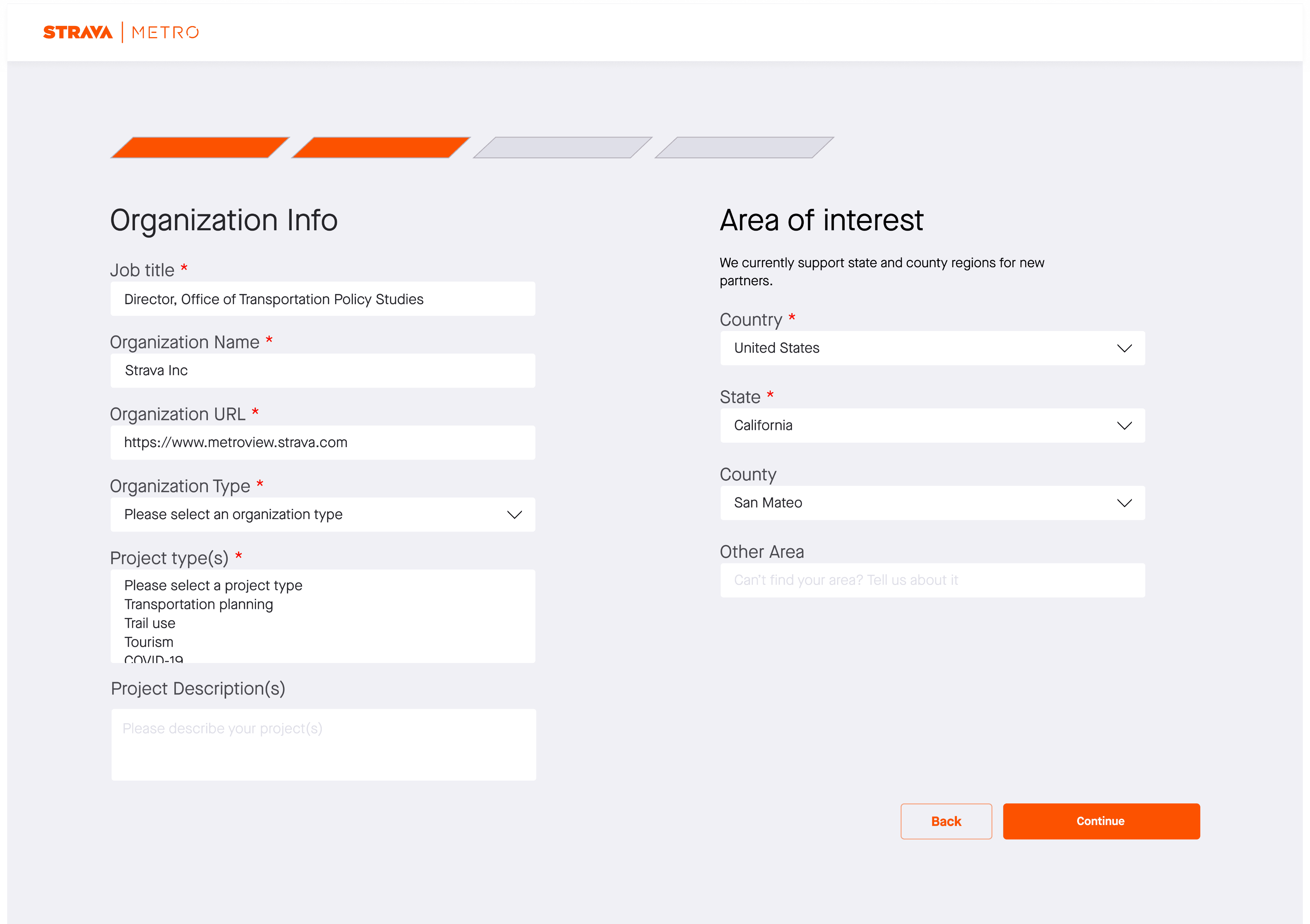
Splitting the single-page form into staged steps solved two problems simultaneously. For applicants, it reduced cognitive load by surfacing only contextually relevant fields at each step—removing the all-or-nothing proposition of a long form that required every answer before submission. For Customer Success, it ensured contact information was collected early enough in the flow to follow up on incomplete applications. Applicants who dropped off midway were no longer invisible.
We added inline email validation to screen for personal addresses at point of entry, surfacing an error before the application could be submitted. This removed the manual follow-up loop entirely—the number-one operational request from the team.



Branding
Strava and Metro shared little visual language between them, despite Metro operating under Strava’s umbrella and benefiting from its 150+ million user base. The application was one of the few surfaces where a new partner forms their first impression of both products together.
I introduced a deliberate brand connection through the progress bar: using the same chevron angle as the Strava logo, with each completed step filling in Strava’s brand orange. The detail was well-received internally—a meaningful tightening of the relationship between Metro’s credibility and Strava’s brand equity at the exact moment it mattered most.
Applicant admin portal

Customer Success agents worked through queues of applicants in specific review stages. The existing admin page gave them a single undifferentiated list that ignored this entirely. We reorganized the user list by application stage, allowing agents to focus on application status when moving through a queue.
We also expanded the information visible in each row, reducing the need to open individual account views for basic review decisions. For two agents managing thousands of applications, fewer clicks per account across hundreds of daily reviews added up to material time savings.
Partnership renewal


To avoid service interruptions for partners who downloaded monthly data updates, we set a 30-day advance notification window: an automated email trigger and a persistent dashboard banner after login, giving partners enough runway to complete renewal before access lapsed.

The renewal flow surfaced exactly what it was designed to find. The most common cases were consultants whose projects had ended and employees who had moved on from their organizations. Without renewal, those accounts—and the athlete data they could access—would have remained open indefinitely. This is where the openness/gatekeeping tension resolves: annual verification wasn’t friction for good partners. It was due diligence for the 150 million athletes whose data Metro runs on.
